

The European INTERREG VI ReactiveCity project aims to improve our understanding of emerging urban contamination and support its reduction in the context of climate change adaptation. The project focuses in particular on micropollutants in the urban water cycle, their sources and pathways, and their potential impacts on aquatic environments and human health.
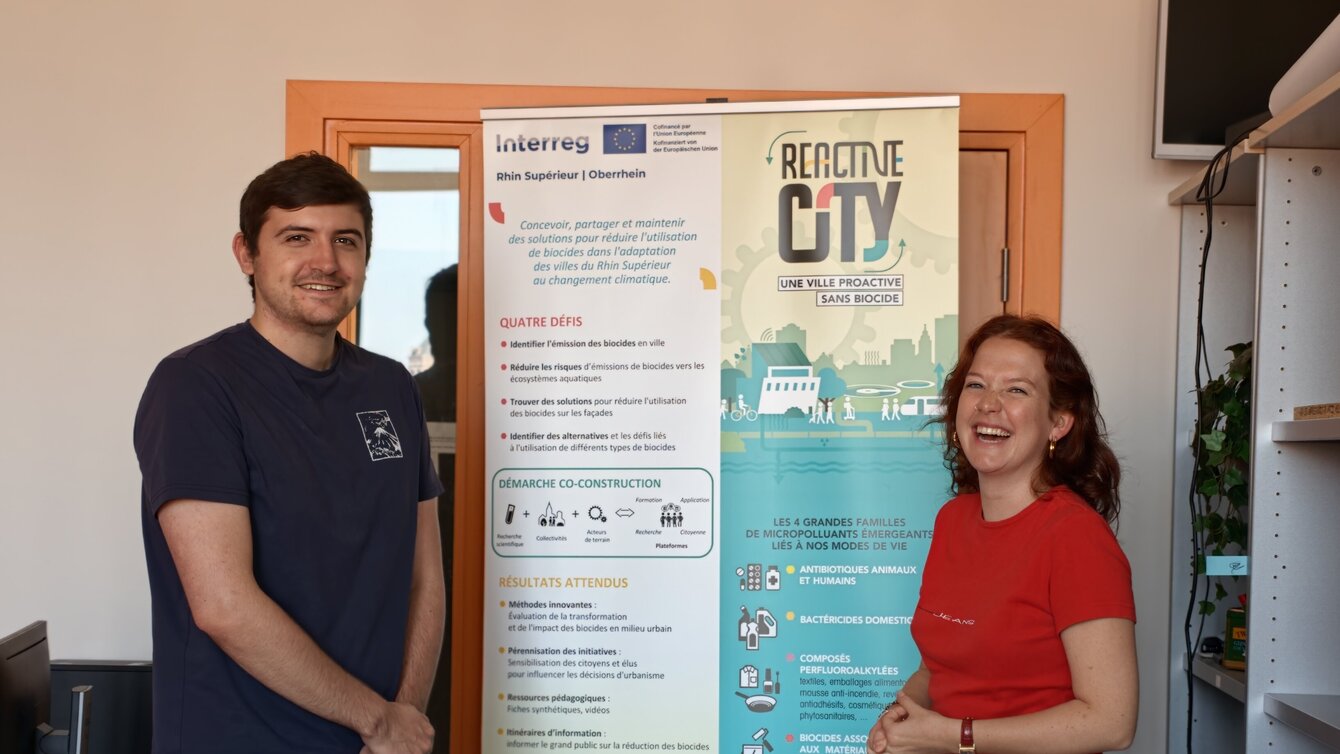
Noé Dumas: characterising urban contaminants across Strasbourg
As a research engineer, Noé Dumas contributes to the development of an urban-scale demonstrator linking chemical contaminants and aquatic ecosystem quality, in close collaboration with local authorities and water management stakeholders.
His work focuses on the characterisation of emerging organic contaminants in Strasbourg's urban water network, using high-resolution mass spectrometry (HRMS) and non-target screening approaches. The objective is to identify contaminants present in urban wastewater, characterise their sources and fluxes, and improve our understanding of contamination patterns at the city scale.
His work will include:
- developing a detailed protocol for non-target screening of urban organic contaminants using Orbitrap mass spectrometry;
- conducting two sampling campaigns under contrasting hydrological conditions;
- performing targeted and non-targeted analyses of wastewater samples;
- establishing mass balances and estimating contaminant fluxes at the urban scale;
- presenting the results at the ReactiveCity Forum.
These activities will also contribute to the project's modelling and scientific dissemination.
Louise Negri: sharing and promoting the project's results
As a research engineer in knowledge dissemination and transfer, Louise Negri is responsible for promoting and facilitating the uptake of the knowledge generated by ReactiveCity.
Her work includes:
- collecting and synthesising the project's outputs;
- coordinating the preparation of dissemination and reporting materials, including the final report and policy briefs;
- supporting the dissemination of results to different audiences;
- organising the ReactiveCity final forum, including its programme, invitations and activities;
- co-facilitating and contributing to the conclusion of the project's citizen platform, application and training activities.
It is already highly motivating to work on a project dedicated to improving water quality for everyone. Being actively involved in making its results accessible to citizens and institutions makes the experience even more rewarding.
Two complementary roles supporting a shared objective
Together, these two positions strengthen the link between knowledge production, urban water monitoring and knowledge transfer within ReactiveCity. Their complementary roles also reflect the objectives of ITI SWITCH, bringing together water sciences, environmental chemistry, urban studies and transdisciplinary approaches to support the sustainable transformation of cities and their socio-hydrological systems.