

Past event
Thank you all for your participation.
11–12 March 2026
European Doctoral College
University of Strasbourg
To download the full programme
The proceedings and presentation materials will be made available soon on this page.
Over two days, participants discussed and co-developed responses to major 21st-century water challenges. The Grand SWITCH provided a space for dialogue, reflection, and action, bringing together researchers, engineers, students, artists, local authorities, socio-economic actors, and citizens. Discussions addressed water quality and quantity, ecosystem restoration, common water uses, and climate resilience.
Key figures
- More than 150 participants
- 40+ speakers, with gender parity
- Strong diversity of profiles (research, local authorities, industry, etc.)
- Four main thematic challenges addressed
- Reinforced Living Lab and partnership dynamics
Forum outputs
- Report (coming soon)
- Presentation materials (coming soon)
The forum explored how science, territories, and society can jointly design credible and desirable transition pathways and governance models, structured around four key themes:

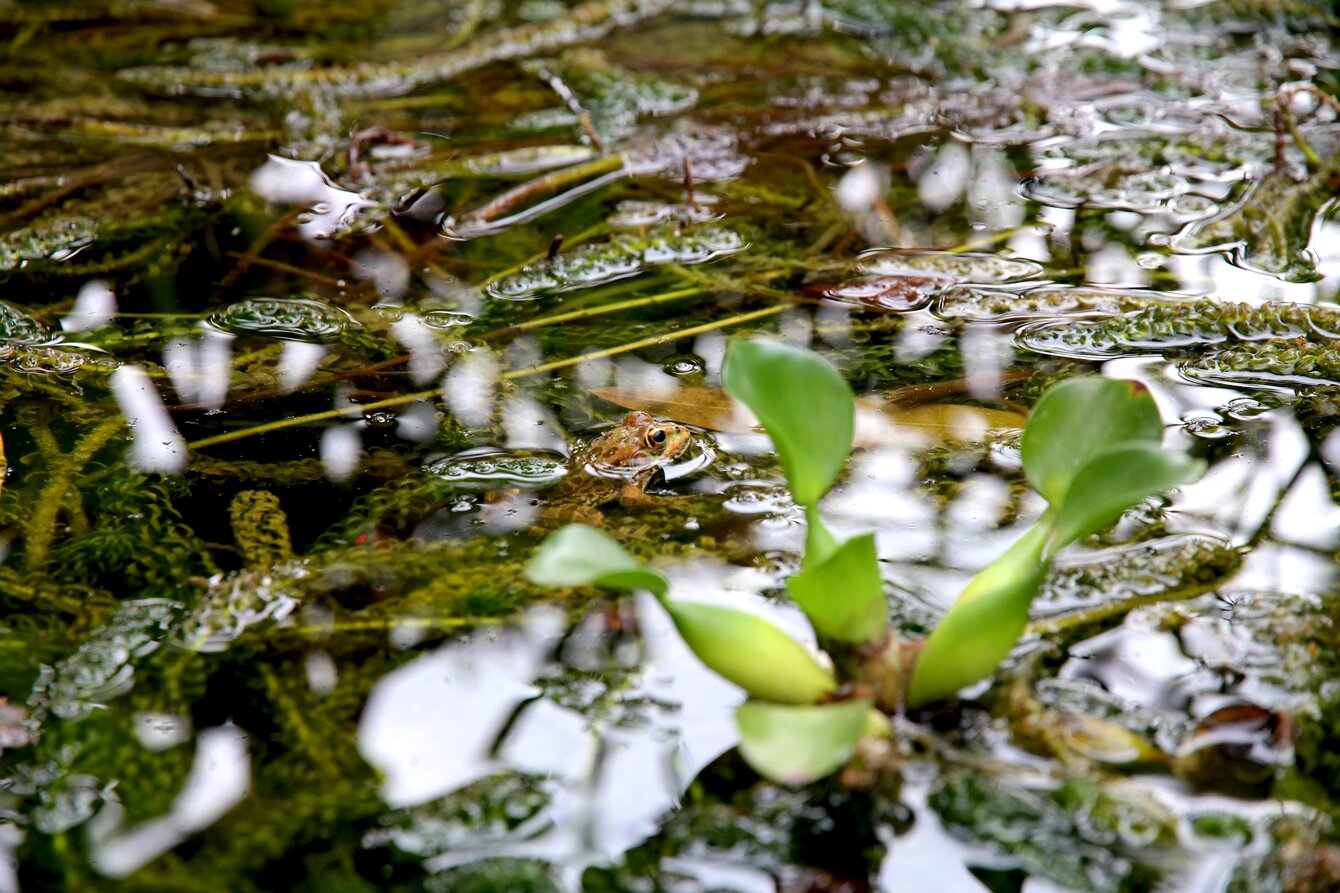

The four thematic focuses of the Grand SWITCH provide a structured journey through contemporary water-related challenges. Designed as spaces for dialogue between science, territories, and society, they highlight the transformations required to address ecological, health, economic, and climate-related issues affecting water resources in the Upper Rhine region. Each session combines scientific insight, territorial anchoring, and contributions from field actors, fostering an exchange between knowledge and practice.
These thematic sessions serve as entry points for understanding the complexity of hydrosystems and the transitions they require. They address the links between water and biodiversity, the health implications of water quality, the interactions between economic uses and resource availability, and the impacts of climate change on ecosystems and territories. Together, they outline the key challenges to be considered in designing sustainable water pathways.
By bringing together scientific expertise, field-based experience, and operational perspectives, these sessions fully embody the spirit of the Grand SWITCH: a space where disciplines converge and territories experiment with new ways of acting. They also highlight the role of Living Labs as living environments for experimentation, collective learning, and innovation in support of sustainability transitions.
Embedded in the ITI SWITCH framework and its Living Labs, the SWITCH Forum showcased cutting-edge scientific knowledge, territorial innovations, and concrete cooperative approaches. This dynamic was further strengthened by the Water Family, the Cross-border Water and Sustainability Chair, and the PEPR OneWater programme, which together foster new governance models, highlight inspiring field experiences, and support operational solutions to enhance water resilience in the Upper Rhine region.
Programme (archive)
Opening lecture: Follow the water! A catchment perspective on sustainable hydrosystem management
11/03 | 9:30-10:30
by Karl Matthias Wantzen, Transboundary (EUCOR, UNESCO, RGE) Chair on Water and Sustainability
- What do we know about the effects of human impacts on the global and regional (catchment) water cycles?
- From the tragedy of the commons to the tyranny of small decisions: the hard life of an elongate rivers in ellipsoid territories, governed by square-headed decision-makers,
- Life in the rhythm of the waters: how the natural flow regime shapes both, biological and cultural diversities,
- Take the bull by its horns: how to increase speed and efficiency in hydrosystem management.
This presentation hinges on a UNESCO study on human-river-relationships worldwide (https://unesdoc.unesco.org/ark:/48223/pf0000382775) and on the development of the new, transdisciplinary Master Course on Continental Water Sustainability
Water & Health Focus
11/03 | 11h-12h30
- Links between environmental and human health
- Impacts of chemical, biological, and physical pollution
- From exposome to chronic diseases and combined exposure risks
Keynote
Dimitri Heintz (PIMS, IBMP)
Territorial feedback: “One Health: water at the centre of regional concerns”
- Launch of STEP Living Lab – Émilie Muller
- URBACT project – Eurometropole of Strasbourg
Round table: “Monitoring water quality for different uses in a One Health perspective”
- Links between environmental and human health
Dimitri Heintz, plateforme Plant Imaging & Mass Spectrometry (PIMS), IBMP
Projet URBACT – Eliabel SEYS / Pascale ROUILLARD-NEAU - Eurométropole de Strasbourg
Émilie Muller (Living Lab STEP)
Leslie Ogorzaly, Senior Lead R&T Scientist, département Environmental Research & Innovation (ERIN), Luxembourg Institute of Science and Technology (LIST), Belvaux (Luxembourg).
OPUS Workshop : Au croisement des savoirs : comment faire recherche ensemble ?
11/03 | 14h-15h30
Where do participatory research and citizen science (PRS) originate? What do they involve, and how can they be supported?
The OPUS unit provides an overview of PRS and invites participants to collectively explore the contours of co-produced research. This workshop is open to all audiences, academic or non-academic, regardless of prior familiarity with participatory approaches.
Agenda:
- Introduction: A profile of participatory research
- Overview: What are PRS?
- Interactive workshop: Behind the scenes of a PRS project
Facilitated by Adèle THIPHAGNE and Emeline DUFRENNOY
Interactive debate & lecture
How to share water in a water-stressed world? Territorial governance and inclusion of non-human perspectives
11/03 | 14h-15h30
The session opens with an interactive debate designed to introduce key water-sharing challenges in an engaging format. Participants position themselves in space in response to statements, encouraging reflection, dialogue, and perspective shifts. This dynamic format provides an accessible entry point into the topic.
The debate is followed by a dual-voice lecture by Rémi Barbier and Marie-Pierre Camproux:
“How to share water in a water-stressed world? Territorial governance and inclusion of non-human perspectives.”
The session offers a broader perspective on water governance and explores concrete avenues for rethinking decision-making frameworks.
Guided visit
“Long live the Rhine!” thematic exhibition – Zoological Museum
11/03 | 14h-15h
Guided visit on the Rhine River, focusing on biodiversity and environmental change, led by Laurent SCHMITT (University of Strasbourg).
The exhibition presents the ecosystems of the Upper Rhine and highlights regional biodiversity. Visitors explore representative species of the Rhine basin and examine, through interactive displays, the influence of human activities and river engineering on ecosystem dynamics. The exhibition places these issues in a broader context, addressing ecological, economic, and cultural dimensions and encouraging public engagement.
In partnership with the Museums of Strasbourg.
Meeting point: Zoological Museum, 29 boulevard de la Victoire, Strasbourg.
Water & Biodiversity Focus
11/03 | 16h-17h30
How can aquatic ecosystems be preserved in the context of land-use change and global environmental pressures?
Canalised rivers, degraded wetlands, and overexploited aquifers highlight the major challenges of ecosystem restoration under conditions of intensive anthropogenic pressure.
This raises key questions regarding renaturation, nature-based solutions, and the legal recognition of ecosystems.
Keynote
Jean-Nicolas BEISEL
Territorial feedback: “A decade of ecological and geomorphological monitoring in a regulated section of a major river: the Old Rhine.”
- Cybill STAENTZEL, RESTORE Living Lab
- Agnès Barillier, EDF
Round table: “Preserving, managing, and restoring aquatic ecosystems: barriers and levers”
- Guillaume Stinner, Plan Rhin Vivant
- Elodie Giuglaris, BRGM
- Frédéric Schaeffer, Bruche Mossig
Moderation : Cybill STAENZEL
Crossed perspectives
Citizen engagement and scientific research: convergences and tensions
11/03 | 17h30-18h45
Jean-Yves Georges (CNRS, IPHC)
Cybill STAENZEL (University of Strasbourg, LIVE)
Adrien SAPHY (PhD candidate, forest ecosystem biogeochemistry)
Moderation: Anne Mellier (journalist)
In the context of environmental crises, many researchers engage publicly or alongside civil society. This raises key questions about scientific legitimacy, public positioning, and the balance between advocacy and objectivity.
While some perceive a risk of blurring boundaries between science and activism, others argue that such engagement strengthens the societal relevance of research. This discussion highlights the need for an evolving ethical and institutional framework that recognises engagement as part of scientific practice while ensuring transparency and rigour. It represents a step toward a renewed science–society contract.
Film screening
The Invisible River: a hidden treasure beneath the Rhine plain – Serge Dumont
11/03 | 19h-20h30
In partnership with the Jardin des Sciences
Introduction by Serge Dumont (Senior Lecturer, University of Strasbourg)
Beneath the Rhine plain flows an invisible river: a groundwater ecosystem where water and life circulate through hidden pathways. In rare locations, it emerges under pressure, forming crystalline streams that host unique biodiversity. This fragile system is threatened by invasive species, intensive agriculture, and water abstraction.
Through his work as both researcher and filmmaker, Serge Dumont documents aquatic ecosystems, particularly gravel pit landscapes in Alsace, in collaboration with the Ried Bleu association.
The film reflects the work of ITI SWITCH, where researchers, stakeholders, and Living Labs study the preservation and sustainable management of aquatic environments and their interactions with human uses.
Water & Sustainable Economy Focus
12/03 | 9h-10h30
Can water be simultaneously a vital resource, a common good, and a driver of economic transition?
Balancing water scarcity, social equity, and economic innovation is central to sustainable transformation pathways.
Can water become a driver of transition that generates value without becoming a source of conflict or speculation?
Keynote
Anne Rozan
Territorial feedback: “Water management and sustainable agriculture in Alsace: agro-economic models under climate change”
- Sylvain PAYRAUDEAU (WEFE Living Lab)
- Franck HUFSCHMITT (SDEA)
Round table: “Transforming agricultural systems under global change: economic challenges, responsibilities, and levers for action”
- Pascal Vauthier (AERM)
- Samuel Bonvoisin (Association for regenerative hydrology)
- Sébastien Boyer (EMS)
Hydrostalgia of our liquid bodies
12/03 | 13h30-14h
By reinterpreting the figure of the Lorelei, a mythical character from the Rhine imagination, this performance explores “hydrostalgia”: an emotional connection to the fragility of hydrosystems.
This reading performance is part of an ongoing art–science research project developed with the CréaLab of the University of Strasbourg.
By LEFEBVRE ZISSWILLER, (artists)
The duo works across documentary and speculative visual practices, exploring human–environment relationships.
*The CréaLab is an initiative of the OPUS Hub (Open University of Strasbourg), developed in close collaboration with the Jardin des Sciences and the University’s Cultural Action Service. The OPUS project has received state funding managed by the French National Research Agency (ANR) under the “Investissements d’Avenir” programme (reference ANR-21-IDES-0003).
Water & Climate Focus
12/03 | 14h-15h30
How can territories adapt to extreme hydrological regimes?
Heatwaves, droughts, and floods require new approaches to spatial planning and water governance.
Adaptation, sobriety, and anticipation are key strategies for building resilience.
Keynote: Understanding risks to prepare the future
Mário J. Franca (Hydraulic engineering and water resources management)
Territorial feedback: “Mountain water cycle: study, disruption, and sharing”
- Marie-Claire PIERRET / Noémie EHSTAND
- Marie-Paule GAY (Mayor of Aubure), Eliabel SAYS
Round table: “Hydrosystems under pressure: adaptive management under uncertainty”
- Mário J. Franca,
- Carmen de Jong,
- Marie-Claire Pierret,
- Adrien Wanko.
Industry & sustainability round table (PUI-A): Adapting businesses to sustainability requirements.
12/03 | 14h-15h30
This session highlights how companies can contribute to sustainable water and hydrosystem management. It also explores collaborations with ITI SWITCH Living Labs and research projects, illustrating co-production between academia, industry, and territorial stakeholders.
Participants:
- Marie-Christine Huau (VEOLIA)
- Alicia Adrovic (SOPREMA)
- Jérôme Mougel (ODYSSEE ENVIRONNEMENT)
Moderation: Christophe Kahlfuss (PUI-A innovation officer)
IDIP Workshop
Manifesto for improving interdisciplinary sustainability education
12/03 | 15h45-18h00
A participatory workshop supporting the University’s strategy, in collaboration with IDIP.
Animation: Renata Jonina & Salomé Desanges
Do you consider interdisciplinary thinking an asset for addressing sustainability challenges? Are you questioning how interdisciplinary teaching is implemented in practice? Do you have experience or ideas to share on this topic?
Whether you are a lecturer, PhD candidate, or professional engaged in sustainability issues, this collaborative workshop is designed for you.
Participants will exchange with peers, explore practical feedback, and contribute to the University’s strategy by helping draft a note aimed at developing interdisciplinarity in sustainability education at the University of Strasbourg (Unistra).
Serious Game : Speaking as a proxy for non-humans in defending the rights of the Rhine
12/03 | 16h-18h
The Rhine River has been shaped by human-centered management. This interactive session invites participants to form a “river parliament/assembly", representing non-human species—including the river itself—to envision its future.
Through role-play and discussion, the workshop explores river governance from non-human perspectives and envisions a restoration plan that centers their rights.
This serious game is organised by Yixin Cao and Thomas Wendt, postdoctoral researchers, bringing together expertise in water governance, environmental justice, and participatory methods.
This forum is part of the ITI SWITCH initiative and has strengthened links between research, territories, and socio-economic stakeholders.
The outcomes will directly inform future ITI SWITCH activities and support the development of its research and training programmes.