

- Training future professionals in sustainable socio-hydrosystem management
- From Science Fiction to Academic Vision
- Innovative, solution-oriented teaching
- Career opportunities and prospects
- How to apply
- Academic calendar and programme structure
- Useful information and advice
- An internationally recognized double-degree
The Continental Water Sustainability Master’s program is a two-year international program dedicated to the sustainability of continental waters. This excellence-oriented program leads to the award of a double degree.
Summary
Training future professionals in sustainable socio-hydrosystem management

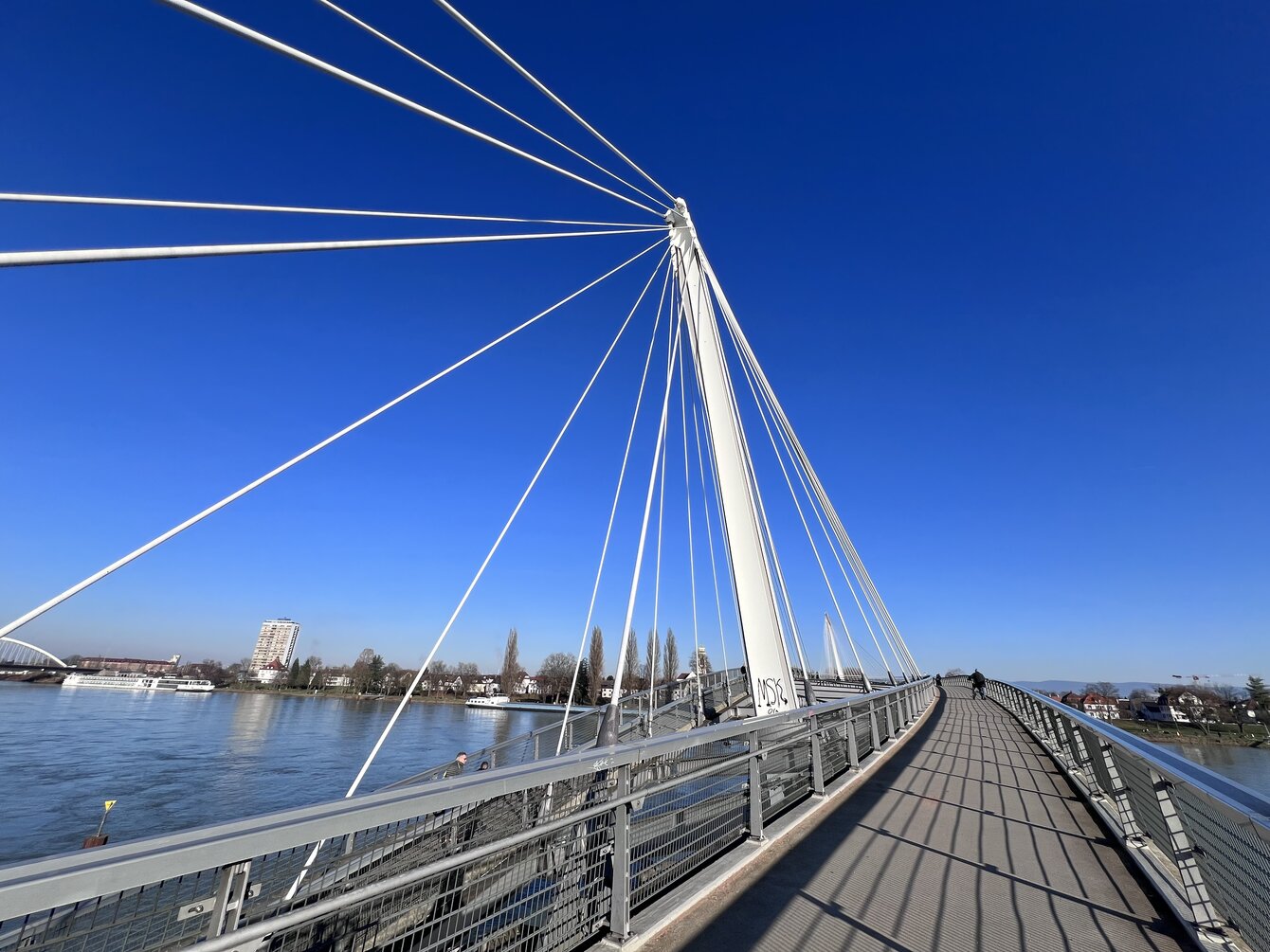
"Pont des Deux Rives" over the Rhine (Strasbourg)
The Master in Continental Water Sustainability is a two-year international programme dedicated to understanding and addressing the major challenges related to the sustainability of continental hydrosystems (rivers, lakes, wetlands etc). This programme of excellence leads to a double degree, awarded on the one hand by the University of Strasbourg, co-accredited by the National School for Water and Environmental Engineering at Strasbourg (ENGEES), and on the other hand by the Karlsruhe Institute of Technology (KIT).
Designed to respond to global water management challenges (such as water governance, ecological restoration, urban hydrology, climate issues, pollution, water use conflicts, etc.), the programme trains professionals capable of analysing socio-hydrosystems, designing innovative solutions, and implementing them in diverse environmental, social and institutional contexts.
From Science Fiction to Academic Vision
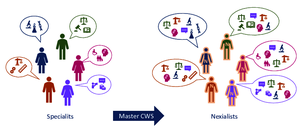
“ Nexialism is the science of joining together in an orderly fashion the knowledge of one field of learning with that of other fields. It provides techniques for speeding up the processes of absorbing knowledge and of using effectively what has been learned. ”
The Voyage of the Space Beagle, A.E. van Vogt (1950)
Nexialism, as defined by the novelist A. E. van Vogt, is the very DNA of the CWS Master’s programme: the curriculum is entirely designed to train experts capable of a holistic approach to continental socio-ecological hydrosystems.
Beyond providing a strong academic foundation, our ambition is to develop students’ ability to think interdisciplinarily, to collaborate across cultures, to adopt approaches that may lie outside conventional frameworks, and to remain strongly oriented toward problem-solving.
Innovative, solution-oriented teaching

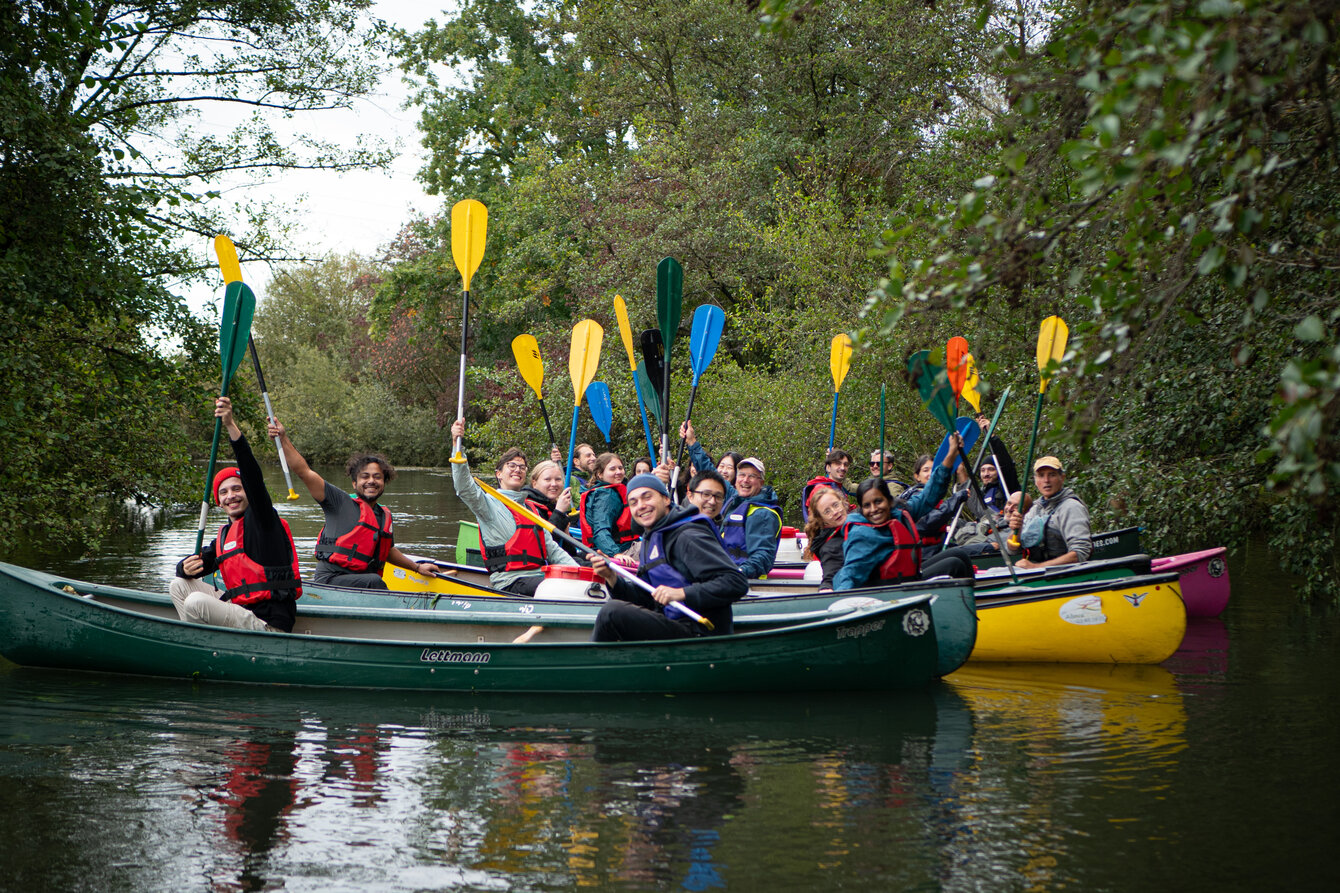
Field Trip 2024
An interdisciplinary approach
The programme combines:
- Natural sciences and engineering (hydrology, ecology, etc.),
- Human and social sciences (sociology, communication strategies, etc.).
This approach enables students to understand the interactions between the physical, biological and social dimensions of aquatic ecosystems and to develop sustainable responses to complex water management challenges.
Learning by doing
The programme places a strong emphasis on practice-based learning.
Students develop key skills in:
- teamwork and interdisciplinary collaboration,
- communication, negotiation and conflict management,
- complex project management.
Innovative teaching methods such as hackathons, applied projects and case studies with real stakeholders allow students to build on an international pool of existing solutions, adapt them to different socio-ecological contexts, and assess their long-term efficiency.
Key highlights
- A unique interdisciplinary approach, combining water sciences, engineering and social sciences
- A solution-oriented and field-based programme
- A strong international approach
- A recognised double degree
Career opportunities and prospects
After completing the programme, graduates may:
- join public administrations or local authorities,
- work in the private sector (consulting firms, engineering offices, companies),
- join international organisations or NGOs,
- pursue a PhD or a research career.
Examples of careers:
Water and environmental project officer, sustainable water management consultant, hydrological engineer, public water policy analyst, researcher.
How to apply
How to apply
To be eligible for the double degree programme, applicants must meet the following requirements:
- Required degree
A first-cycle degree equivalent to 180 ECTS credits in a relevant field with a focus on water-related disciplines - English language proficiency:
- Minimum level B2 (CEFR)
Key dates and application platforms
- At the University of Strasbourg (Unistra)
European applicants: 17 February – 16 March 2026
Platform: MonMaster
Non-European Union applicants: December to January, depending on the country
Platform: Études en France (Campus France)
- At KIT
Online application deadline:31 May
Platform:KIT application portal
Academic calendar and programme structure
| SEMESTER 1 | SEMESTER 2 | SEMESTER 3 | SEMESTER 4 |
|---|---|---|---|
| 15.09 - 15.03 | 15.03 - 15.06 | 01.09 - 15.02 | 01.03 - 30.09 |
| KARLSRUHE | STRASBOURG | STRASBOURG | Internship / Master Thesis |
For the full curriculum, please follow this link.
Useful information and advice
Currently under development
An internationally recognized double-degree
This Master's program is supported by EUCOR – The European Campus, which facilitates cooperation and mobility among 5 universities in the Upper Rhine area.
It is part of UNESCOs Intergovernmental Hydrological Programme and its Youth Programme in Ecohydrology, recommended by the the IHE Delft Institute for Water Education.
It takes place under the auspices of the UNESCO Chair on Rivers and Heritage and the EUCOR Excellence Chair on Water and Sustainability.

![<strong>[Translate to English:] Réseau EUCOR</strong>](/websites/_processed_/4/d/csm_Carte_Eucor_FR_NEW_bb17ca2258.jpg)