The ITI SWITCH 2027 Call for Projects is now open!
**ITI SWITCH members: the 2027 Call for Projects is now open!** Strengthen interdisciplinary collaborations on socio-hydrological and urban systems with funding opportunities offered by the ITI.
 &
 Funded under the Excellence Initiative program &

**ITI SWITCH members: the 2027 Call for Projects is now open!** Strengthen interdisciplinary collaborations on socio-hydrological and urban systems with funding opportunities offered by the ITI.

Une belle reconnaissance de la place de l’ITI SWITCH dans la dynamique de l’Université de Strasbourg face aux enjeux de transformation socio-écologique.
Explore the latest developments in sustainability through our sections on research highlights, funding opportunities, scientific events, research, education and training, Living Labs, transdisciplinarity, and other ITI SWITCH news.
Jusqu’au 6 novembre 2026, contribuez à une enquête nationale sur les pratiques, les difficultés et les besoins liés au partage et à la réutilisation des données sur l’eau. Questionnaire anonyme (15 min).
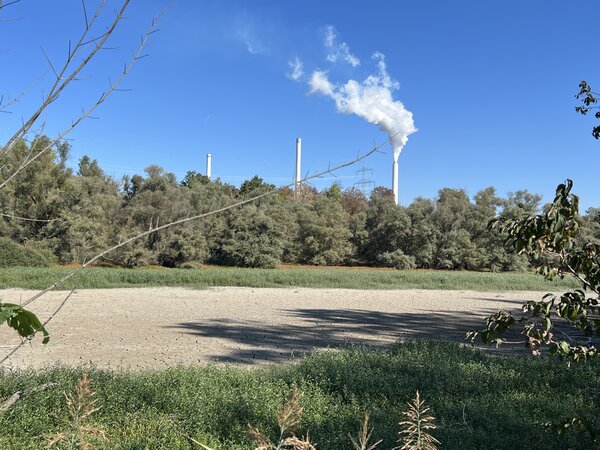
Du terrain au laboratoire, la première promotion du Master CWS explore les dynamiques fluviales, la restauration écologique et les enjeux liés aux crues, entre Strasbourg et Karlsruhe.
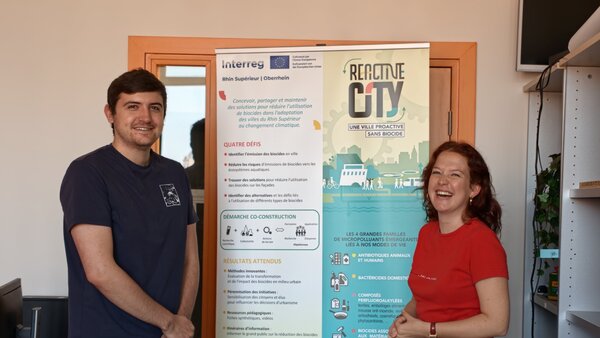
Louise Negri and Noé Dumas joined the European INTERREG VI ReactiveCity project in early October 2026. They will contribute, respectively, to the dissemination and uptake of project results and to the study of emerging contaminants in urban water systems.

At the 4th Rhine Water Conference, Gwenaël Imfeld presented the interdisciplinary and transdisciplinary research and training approaches developed by ITI SWITCH to address the sustainability of water and cities.

In the Vosges, Karl Matthias Wantzen attended the inauguration of five peatland restoration sites as part of the Mission Nature programme. The event highlighted the programme’s first achievements and several decades of efforts to protect these ecosystems.
Comment imaginer des systèmes et des paysages agricoles à la fois soutenables et enviables pour les territoires ? Une nouvelle publication issue des travaux de thèse de Lou Weidenfeld apporte des éléments de réponse à partir d'une démarche menée sur le bassin versant de la Souffel. Les travaux…

How can urban gardening be made safer when soils may be contaminated? In Strasbourg, the participatory research programme SolenVille and the Tous en Sol initiative, developed within the Urban Environmental Research Observatory (Zone Atelier Environnementale Urbaine, ZAEU), are addressing this…

On the occasion of the centenary of the Port of Strasbourg, Karl Matthias Wantzen joined a round table on cross-border education in the Upper Rhine region. The discussion highlighted the value of programmes such as the Continental Water Sustainability Master’s programme.

As part of the Cross-Border Water and Sustainability Chair, Karl Matthias Wantzen presented the Continental Water Sustainability Master’s programme to the European Water Youth Parliament. Discussions continued at the Rhine Water Conference, focusing on water challenges in the Upper Rhine region.
Le 21 septembre 2026, une journée d’étude organisée par l’OHM Fessenheim à Strasbourg a interrogé les héritages du démantèlement de la centrale nucléaire : mémoires, savoirs, traces matérielles et transformations des territoires. Les échanges ont croisé approches juridiques, sociales et…

At the Gamberi Water Festival, Karl Matthias Wantzen received the International Water Prize in recognition of his commitment to strengthening the science–policy interface and advancing river conservation. The Continental Water Sustainability Master’s programme was also highlighted during the…

À la Maison de Louis Pasteur, l’exposition explore le monde microbien à travers des illustrations originales, dont celles de Julia Coffre, enseignante à l’Université de Strasbourg, mettant en avant le rôle essentiel des micro-organismes et les liens entre santé humaine, animale et environnementale.
Le partenariat européen Water4All lance un appel à projets transnationaux consacré à la gestion durable de l’eau. Les équipes de recherche intéressées sont invitées à soumettre leur pré-proposition avant le 10 novembre 2026.

Après trois années de conception et de travail collectif, le Master Continental Water Sustainability (CWS) ouvre ses portes cette année à sa première promotion. Une étape importante qui marque le passage de la conception à la mise en œuvre concrète de ce projet ambitieux de double-diplôme…

With 150 billion m³ of water supplying five million people across three countries, the Rhine aquifer is a vital resource. In an article published by Savoir(s), Gwenaël Imfeld discusses the challenges of protecting this resource and research conducted as part of the European ERMES-ii-Rhine project.

Face aux sécheresses et aux pressions exercées sur le fleuve, des associations militent pour reconnaître une personnalité juridique au Rhin afin de mieux défendre ses intérêts écologiques. Une réflexion qui interroge aussi la gouvernance de l’eau et la coopération transfrontalière.
Chlordécone, amiante, pesticides, PFAS… comment réparer les dommages causés par des expositions toxiques qui touchent des populations entières sur plusieurs décennies ? Dans un article publié par Savoir(s), Marie-Pierre Camproux Duffrène explore la notion de « préjudice collectif sanitaire » et les…
