

The Continental Water Sustainability Master’s program is a two-year international program dedicated to the sustainability of continental waters. This excellence-oriented program leads to the award of a double degree.
Page contents
Master Sciences de la Terre et des planètes, environnement
Parcours Continental Water Sustainability
Objectifs
Master’s programme website:
Fully taught in English, the Master’s program in Continental Water Sustainability (CWS) offers a solution-oriented education and prepares students to tackle the complex challenges related to water sustainability worldwide. Graduates are equipped to analyze problems related to socio-hydrosystems, and to design, communicate, and coordinate the implementation of innovative solutions.
Graduates are qualified for positions of responsibility in industrial companies, engineering offices, local and state authorities, and international development organizations. Additionally, students learn scientific methods and gain qualifications that allow them to pursue an academic career.
In the CWS program, students gain a thorough understanding of various disciplines related to aquatic ecosystems. They grasp the continuum from functional understanding to impact assessment and problem-solving. Students acquire knowledge in both natural and engineering sciences (such as hydrology, hydrogeology, ecology, or hydraulics), in humanities and social sciences (such as sociology, economics, management or communication). Beyond technical knowledge, students gain an understanding of systems through an interdisciplinary approach, allowing them to analyze and grasp socio-ecological interdependencies. In a holistic approach, they integrate social aspects into the processes and interactions between the physical and biological elements of the ecosystem.
Students learn to work effectively within a team, present results to non-specialists, and gain expertise in stakeholder engagement, negotiation and conflict resolution while respecting ethical standards. They also develop methods for efficient and rapid knowledge acquisition (i.e. learning by action and Hackathons).
Students progressively acquire knowledge of a wide range of solutions developed worldwide to address problems related to socio-hydrosystems. With this extensive database and multi-criteria analysis methods, including intangible aspects, they can adapt solutions already tested in other socio-ecological contexts and propose new innovative solutions. They identify obstacles to implementation and communicate solutions effectively. Additionally, they are aware of long-term monitoring and evaluation strategies to assess the performance and impact of implemented solutions over time.
Graduates of the CWS program gain the ability to apply interdisciplinary approaches to solve complex problems in water resources / socio-hydrosystem management by means of their deep understanding of water sustainability issues and their advanced methodological skills. They are well-equipped to contribute to research, innovation, and sustainable development in various water sectors
Stage
Statut
Formation ouverte aux stages
Alternance
Numéro de diplôme
20181000
Référent pédagogique
Karl Matthias Wantzen
Référent administratif
Veronique Marchant
Programme des enseignements
Master 1 - Master Sciences de la Terre et des planètes, environnement - Continental Water Sustainability
Semester 1 (Karlsruhe Institute of Technology)
| CM | TD | TP | CI | |||||||||||
|---|---|---|---|---|---|---|---|---|---|---|---|---|---|---|
Field Trip1 ECTS | - | - | - | 12h | ||||||||||
| - | - | - | - | |||||||||||
| 2h | - | - | 10h | |||||||||||
| - | - | - | 12h | |||||||||||
| - | - | - | - | |||||||||||
| - | - | - | 10h | |||||||||||
| - | - | - | 10h | |||||||||||
| - | - | - | - | |||||||||||
| - | - | - | - | |||||||||||
| - | - | - | - | |||||||||||
| - | - | - | - | |||||||||||
| - | - | - | - | |||||||||||
Water and Energy Cycles6 ECTS | - | - | - | - | ||||||||||
Coding3 ECTS | - | - | - | - | ||||||||||
| ||||||||||||||
Preparatory Projects3 ECTS | - | - | - | - | ||||||||||
| - | - | - | - | |||||||||||
| - | - | - | - | |||||||||||
Nexialism Training Sem 11 ECTS | - | - | - | 20h | ||||||||||
Semester 2
| CM | TD | TP | CI | |||||||||||
|---|---|---|---|---|---|---|---|---|---|---|---|---|---|---|
| - | - | - | - | |||||||||||
| - | - | - | - | |||||||||||
| - | - | - | 20h | |||||||||||
| - | - | - | 10h | |||||||||||
| 20h | - | - | - | |||||||||||
Solutions to Pollution 6 ECTS | - | - | - | - | ||||||||||
| 12h | 8h | 4h | - | |||||||||||
| - | - | - | 14h | |||||||||||
| 30h | - | - | - | |||||||||||
| - | - | - | - | |||||||||||
| 8h | 22h | - | - | |||||||||||
| 8h | 12h | - | - | |||||||||||
| 10h | - | - | 10h | |||||||||||
| - | - | - | - | |||||||||||
| - | - | 8h | - | |||||||||||
| - | - | - | - | |||||||||||
| - | - | - | - | |||||||||||
Foreign Language3 ECTS | - | - | - | - | ||||||||||
| ||||||||||||||
Nexialism Training Sem 21 ECTS | - | 20h | - | - | ||||||||||
Master 2 - Master Sciences de la Terre et des planètes, environnement - Continental Water Sustainability (ouverture en 2027-2028)
Semester 3
| CM | TD | TP | CI | |||||||||||
|---|---|---|---|---|---|---|---|---|---|---|---|---|---|---|
| - | - | - | - | |||||||||||
| 20h | 17h | 3h | - | |||||||||||
| 20h | - | - | - | |||||||||||
| 4h | 26h | - | - | |||||||||||
| 30h | - | - | - | |||||||||||
| - | - | - | - | |||||||||||
| - | - | - | - | |||||||||||
| 18h | 20h | - | - | |||||||||||
| - | - | - | - | |||||||||||
| - | - | - | - | |||||||||||
| - | - | - | - | |||||||||||
| - | - | - | - | |||||||||||
Foreign Language3 ECTS | - | - | - | - | ||||||||||
| ||||||||||||||
Nexialism Training Sem 31 ECTS | - | - | - | - | ||||||||||
| ||||||||||||||
Semester 4
| CM | TD | TP | CI | |
|---|---|---|---|---|
Internship30 ECTS | - | - | - | - |
Campus
Campus Esplanade
Campus Karlsruhe
Établissement(s) partenaire(s)
Karlsruher Institut für Technologie (KIT)
École nationale du génie et de l'eau et de l'environnement de Strasbourg (ENGEES)
Documents à télécharger
Modalités de contrôle des connaissances | MCC
Training future professionals in sustainable socio-hydrosystem management
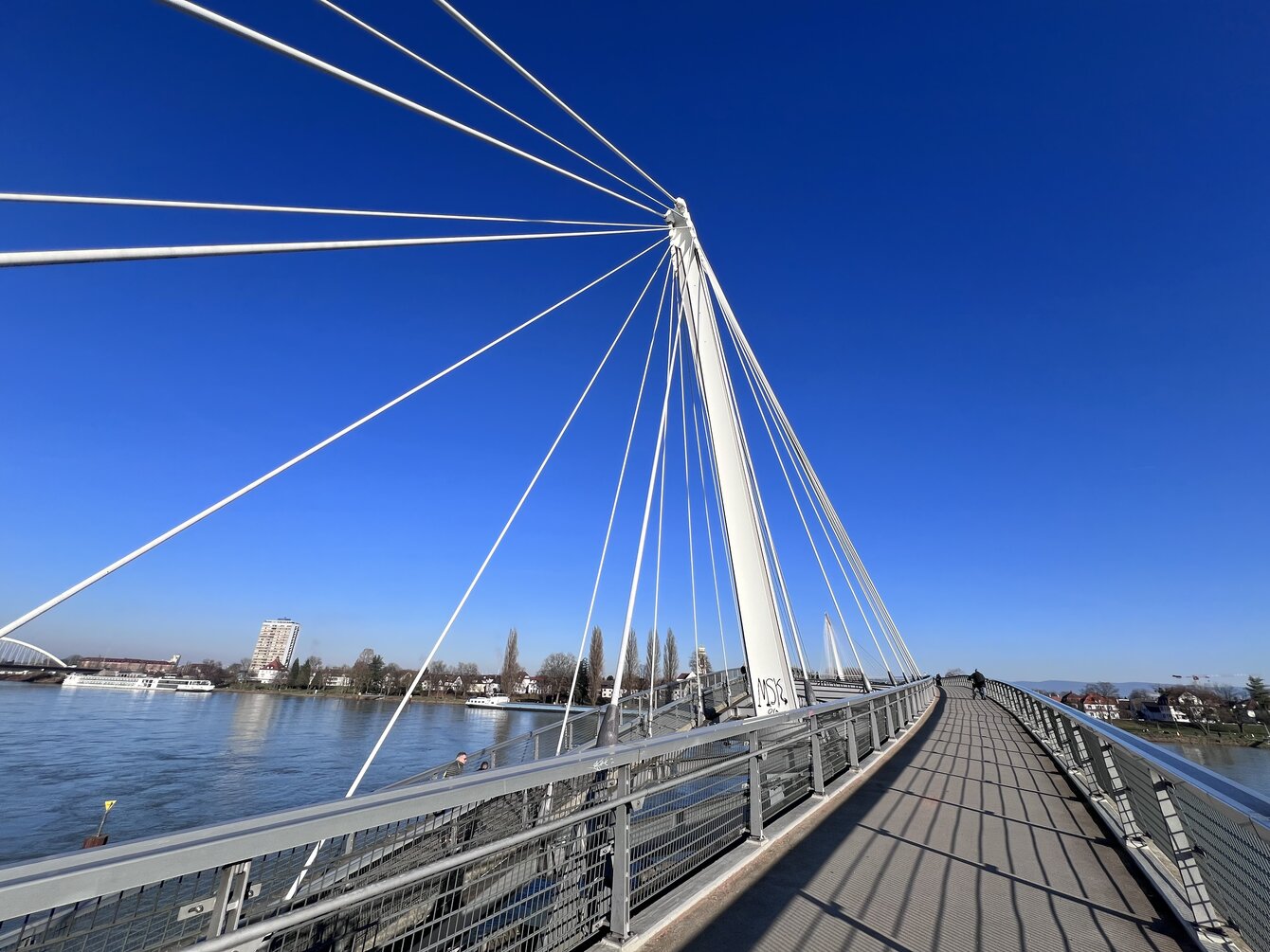
"Pont des Deux Rives" over the Rhine (Strasbourg)
The Master in Continental Water Sustainability is a two-year international programme, fully taught in English, dedicated to understanding and addressing the major challenges related to the sustainability of continental hydrosystems (rivers, lakes, wetlands etc). This programme of excellence leads to a double degree, awarded on the one hand by the University of Strasbourg, co-accredited by the National School for Water and Environmental Engineering at Strasbourg (ENGEES), and on the other hand by the Karlsruhe Institute of Technology (KIT).
Designed to respond to global water management challenges (such as water governance, ecological restoration, urban hydrology, climate issues, pollution, water use conflicts, etc.), the programme trains professionals capable of analysing socio-hydrosystems, designing innovative solutions, and implementing them in diverse environmental, social and institutional contexts.
From Science Fiction to Academic Vision
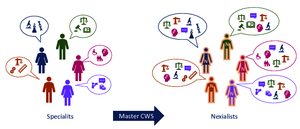
Born out of science fiction, nexialism refers to an approach that connects fields of knowledge rather than compartmentalising them. It is this vision that underpins the Master in Continental Water Sustainability (CWS).
“ Nexialism is the science of joining together in an orderly fashion the knowledge of one field of learning with that of other fields. It provides techniques for speeding up the processes of absorbing knowledge and of using effectively what has been learned. ”
The Voyage of the Space Beagle, A.E. van Vogt (1950)
Nexialism, as defined by the novelist A. E. van Vogt, is the very DNA of the CWS Master’s programme: the curriculum is entirely designed to train experts capable of a holistic approach to continental socio-ecological hydrosystems.
Beyond providing a strong academic foundation, our ambition is to develop students’ ability to think interdisciplinarily, to collaborate across cultures, to adopt approaches that may lie outside conventional frameworks, and to remain strongly oriented toward problem-solving.
Innovative, solution-oriented teaching
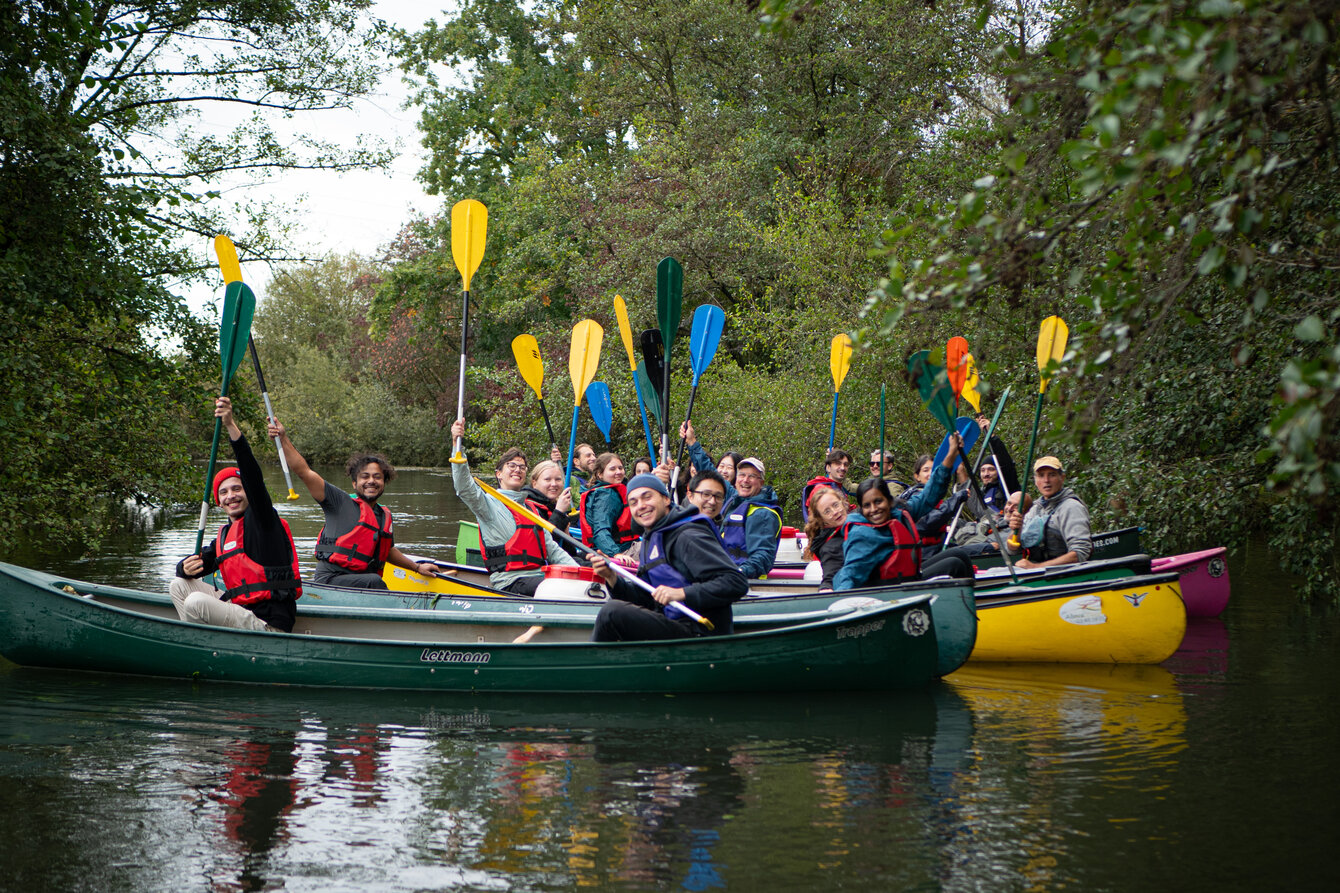
Field Trip 2024
An interdisciplinary approach
The programme combines:
- Natural sciences and engineering (hydrology, ecology, etc.),
- Human and social sciences (sociology, communication strategies, etc.).
This approach enables students to understand the interactions between the physical, biological and social dimensions of aquatic ecosystems and to develop sustainable responses to complex water management challenges.
Learning by doing
The programme places a strong emphasis on practice-based learning.
Students develop key skills in:
- teamwork and interdisciplinary collaboration,
- communication, negotiation and conflict management,
- complex project management.
Innovative teaching methods such as hackathons, applied projects and case studies with real stakeholders allow students to build on an international pool of existing solutions, adapt them to different socio-ecological contexts, and assess their long-term efficiency.
Key highlights
- A unique interdisciplinary approach, combining water sciences, engineering and social sciences
- A solution-oriented and field-based programme
- A strong international approach
- A recognised double degree
How to apply
How to apply
To be eligible for the double degree programme, applicants must meet the following requirements:
- Required degree
A first-cycle degree equivalent to 180 ECTS credits in a relevant field with a focus on water-related disciplines - English language proficiency:
- Minimum level B2 (CEFR)
Key dates and application platforms
- At the University of Strasbourg (Unistra)
European applicants: February – March 2026 (Upcoming dates)
Platform: MonMaster
Non-European Union applicants: October to February, depending on the country
Platform: Études en France (Campus France)
- At KIT
Online application: from April 1 to May 31, 2026
To apply for the CWS track, select the Master Water Science Engineering
Platform: KIT application portal
Academic calendar and programme structure
For the full curriculum, please follow this link.
| Didactic Units (U.E. / Moduls) | ECTS | ||
|---|---|---|---|
SEMESTER 1 (Karlsruhe) 15 sept. | Modul 1 | Field Trip | 1 |
| Modul 2 | Sustainable management of hydrosystems (Introduction to) | 2 | |
| Modul 3 | Mapping of tangible and intangible objects (Introduction to) | 2 | |
| Modul 4 | Think Like a Scientist: Research Integrity and Best Practices in Water Science and Engineering | 3 | |
| Modul 5 | Urban Water Infrastructure and Management | 6 | |
| Modul 6 | Sustainable Management of Rivers and Floodplains | 3 | |
| Modul 7 | Water and Energy Cycles | 6 | |
| Modul 8 | Coding (Python or Matlab) | 3 | |
| Modul 9 | Preparatory projects | 3 | |
| Modul 10 | Nexialism training (1) | 1 | |
| SEMESTER 1 | 30 | ||
SEMESTER 2 (Strasbourg) 15 March | Modul 11 | Restoration and conservation | 8 |
| Modul 12 | Solutions to pollution | 6 | |
| Modul 13 | Mapping of tangible and intangible objects | 7 | |
| Modul 14 | Interdisciplinary projects | 5 | |
| Modul 1( | Foreign langage | 3 | |
| Modul 16 | Nexialism training (2) | 1 | |
| SEMESTER 2 | 30 | ||
SEMESTER 3 (Strasbourg) 1 Sept. | Modul 17 | Intelligent government of hydrosystems | 9 |
| Modul 18 | Management of water quality and habitat structures | 10 | |
| Modul 19 | Interdisciplinary projects | 7 | |
| Modul 20 | Foreign langage | 3 | |
| Modul 21 | Nexialism training (3) | 1 | |
| SEMESTER 3 | 30 | ||
SEMESTER 4 1 March | Master Thesis | 30 | |
| SEMESTER 4 | 30 |
Preparing Your Arrival
Preparing for your mobility is an important step towards a successful stay. Here you will find a selection of useful resources from the University of Strasbourg and KIT to help you before your arrival, including administrative procedures, accommodation, welcome services and practical information.
Université de Strasbourg | KIT |
International Welcome (Homepage) international-welcome.unistra.fr
Before My Arrival | International Welcome Office Student Team Your road to KIT www.intl.kit.edu/istudies/your-road-to-kit.php Before My Arrival |
Housing Search international-welcome.unistra.fr/housing-in-strasbourg/preparing-your-housing-search www.amitel.eu/en/our-residences/international-university-house (website in French) – Phone number : 0972596565 | Housing Search |
FAQ & Contact | Support Service |
Additional Students, welcome to Strasbourg |
A Strong International Framework
This master’s programme is supported by EUCOR – The European Campus, which promotes cooperation and mobility among five universities in the Upper Rhine region.
It is also part of the framework of UNESCO’s Intergovernmental Hydrological Programme, as well as its Youth Programme in Ecohydrology, and is recommended by the IHE Delft Institute for Water Education.
The programme is implemented under the auspices of the UNESCO Chair “Rivers and Heritage” and the EUCOR Chair of Excellence “Water and Sustainability.”